
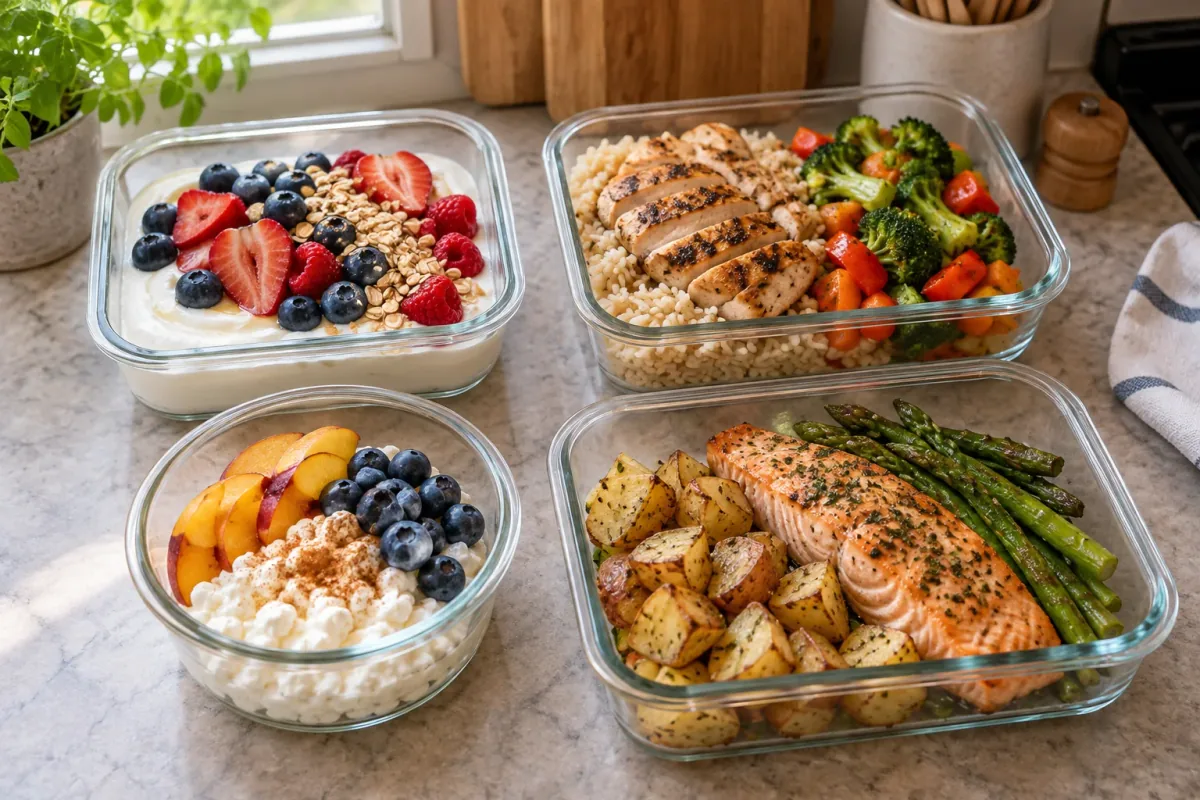
First: 120g Is Not a Universal Protein Target
A 120g protein day can be practical for some exercising adults, but it is not the right number for everyone. Your body size, training, total energy intake, food preferences, health history, and goals all matter.
The International Society of Sports Nutrition position stand states that 1.4–2.0 grams of protein per kilogram of body weight per day is sufficient for most healthy exercising adults. That is a population-level range, not a personalized medical prescription.
To estimate your range:
- Convert pounds to kilograms: body weight in pounds ÷ 2.205.
- Multiply that result by 1.4 for the lower end.
- Multiply it by 2.0 for the upper end.
Examples:
- 120 lb is about 54.4 kg, giving an illustrative range of about 76–109g/day.
- 140 lb is about 63.5 kg, giving an illustrative range of about 89–127g/day.
- 160 lb is about 72.6 kg, giving an illustrative range of about 102–145g/day.
- 180 lb is about 81.6 kg, giving an illustrative range of about 114–163g/day.
So 120g may sit inside the range for one person and outside it for another. Read how much protein you need to build muscle for more context. If you are pregnant, have kidney disease or another medical condition, have a history of disordered eating, or have been told to limit protein, ask a qualified clinician or dietitian before using a fixed target.
The Literal 120g Day
This example uses cooked or ready-to-eat weights unless a line says otherwise. The protein numbers are illustrative estimates based on typical entries in USDA FoodData Central. Your brand, cut, cooking method, and drained or cooked weight can change the result, so use the package label when you have one.
Breakfast: yogurt, eggs, and berries — about 31g protein
- 170g plain nonfat Greek yogurt: about 17g
- 100g cooked whole egg, roughly 2 large eggs without shells: about 13g
- 100g berries: about 1g
Serve the yogurt and berries together, with the eggs on the side. Add cinnamon, herbs, or hot sauce if you like.
Breakfast subtotal: about 31g protein.
Lunch: chicken rice bowl — about 34g protein
- 90g cooked, skinless chicken breast: about 28g
- 150g cooked rice: about 4g
- 200g cooked mixed vegetables: about 2g
- Salsa, lemon, herbs, or another sauce you have measured
Put the rice and vegetables in a bowl, add the sliced chicken, then finish with your sauce.
Lunch subtotal: about 34g protein.
Snack: cottage cheese and fruit — about 18g protein
- 150g low-fat cottage cheese: about 18g
- 1 medium apple, orange, peach, or another fruit
Choose a cottage cheese label close to 12g protein per 100g; brands vary.
Snack subtotal: about 18g protein.
Dinner: salmon, potatoes, and peas — about 37g protein
- 110g cooked salmon: about 28g
- 100g cooked green peas: about 5g
- 200g cooked potato: about 4g
- 100g leafy or non-starchy vegetables, plus a measured dressing if wanted
Season the salmon and serve it with the potato, peas, and vegetables.
Dinner subtotal: about 37g protein.
Estimated daily total: about 120g protein
The arithmetic is 31 + 34 + 18 + 37 = about 120g. Treat that as a useful planning estimate, not laboratory precision. Logging the exact foods and brands you buy may put the day a few grams above or below 120g, which is normal.
Important: This Is Not a Fixed-Calorie Meal Plan
This day is a protein structure, not an energy prescription. The meals will land at different calorie totals depending on the yogurt and cottage cheese you buy, the salmon cut, sauces, oils, cooking method, and any drinks or extras.
If you need more energy for training, increase rice, potato, fruit, bread, or added fat based on your needs. If you need less energy, first measure calorie-dense extras such as oil, dressing, cheese, and sauces instead of automatically cutting the protein serving. Protein does not erase an energy surplus, and a low-calorie intake is not automatically appropriate. For a broader way to coordinate food and training goals, see what to eat to build muscle and lose fat.
Vegetarian Swaps
You can keep the same four-meal structure without meat or fish:
- Breakfast: Keep the yogurt and eggs if you eat dairy and eggs.
- Lunch: Replace the chicken with 150–180g cooked extra-firm tofu and add 100g shelled edamame. Depending on the brands, that bowl usually provides roughly the same 30–35g meal range once the rice and vegetables are included.
- Snack: Keep the cottage cheese, or use 200g high-protein Greek yogurt and check the label.
- Dinner: Replace the salmon with 150g cooked tempeh. With peas and potato, the meal will commonly land in the mid-to-high 30g range.
Recalculate after each swap rather than assuming two foods are identical. The high-protein foods list gives more options and serving ideas.
Vegan Swaps
For a fully plant-based day:
- Breakfast: Use 180g extra-firm tofu as a scramble, plus 200g unsweetened soy yogurt and 10g nutritional yeast. Check the three labels; a typical combination is around 30g protein.
- Lunch: Use the tofu-and-edamame bowl above. If you use seitan instead, remember that seitan contains wheat.
- Snack: Blend one measured serving of soy or pea protein powder with 250ml soy milk. Many combinations provide 25–30g, but the label controls.
- Dinner: Use 150g tempeh with the potato, peas, and vegetables. Adjust the tempeh portion or snack serving so your four subtotals return to your chosen daily target.
Plant-protein products vary widely. Weigh the serving, read the label, and build your total from the products actually in your kitchen.
Budget Swaps That Keep the Plan Practical
- Replace fresh salmon with 120g drained canned salmon and verify the can's protein line.
- Buy larger tubs of store-brand Greek yogurt or cottage cheese instead of single servings.
- Use frozen vegetables, peas, berries, and edamame; their convenience can reduce waste.
- Replace chicken breast with a leaner-trimmed chicken thigh, canned chicken, or eggs, then adjust the cooked serving until the label or FoodData Central estimate reaches the meal subtotal.
- For a low-cost plant option, combine lentils with textured vegetable protein. Weigh both and recalculate because the protein density is not the same as chicken.
- Choose rice, oats, and potatoes as flexible carbohydrate bases, then change the portion to fit your energy needs.
Meal Prep and Food Safety
Cooked weights are easier to repeat when you portion food after cooking. Make three or four servings, cool them promptly, and label the containers with the date. This beginner meal-prep guide can help you build the routine.
For safety, follow USDA FSIS leftovers guidance: refrigerate perishable food within two hours, use most cooked leftovers within three to four days, and reheat leftovers to 165°F (74°C). The same USDA guidance says the refrigerator should be 40°F (4°C) or below.
Allergen Notes
The example day contains milk, egg, and fish. The vegetarian or vegan swaps may contain soy, wheat, or sesame, and sauces or protein powders can introduce other allergens or cross-contact.
The FDA's official food-allergy guidance identifies nine major food allergens in the United States: milk, egg, fish, crustacean shellfish, tree nuts, peanuts, wheat, soybeans, and sesame. Read the full ingredient and “Contains” statements every time you change brands. If you have a diagnosed allergy, use products and preparation practices recommended by your clinician; a suggested swap is not automatically safe for you.
Make the Number Fit You
If 120g is above your estimated range, reduce one or more weighed protein servings instead of forcing the target. If 120g is below your range, add a measured serving to the meals you already like. Your goal is a repeatable day that supports training and adequate total nutrition, not a perfect number at midnight.
Soma Disclosure and Next Step
Commercial disclosure: Soma publishes this article and makes the Soma fitness app. The meal plan above is free to use whether or not you download it.
If you want one place to log your exact foods, compare your day with your protein target, and keep nutrition next to your workouts, Download on the App Store.