
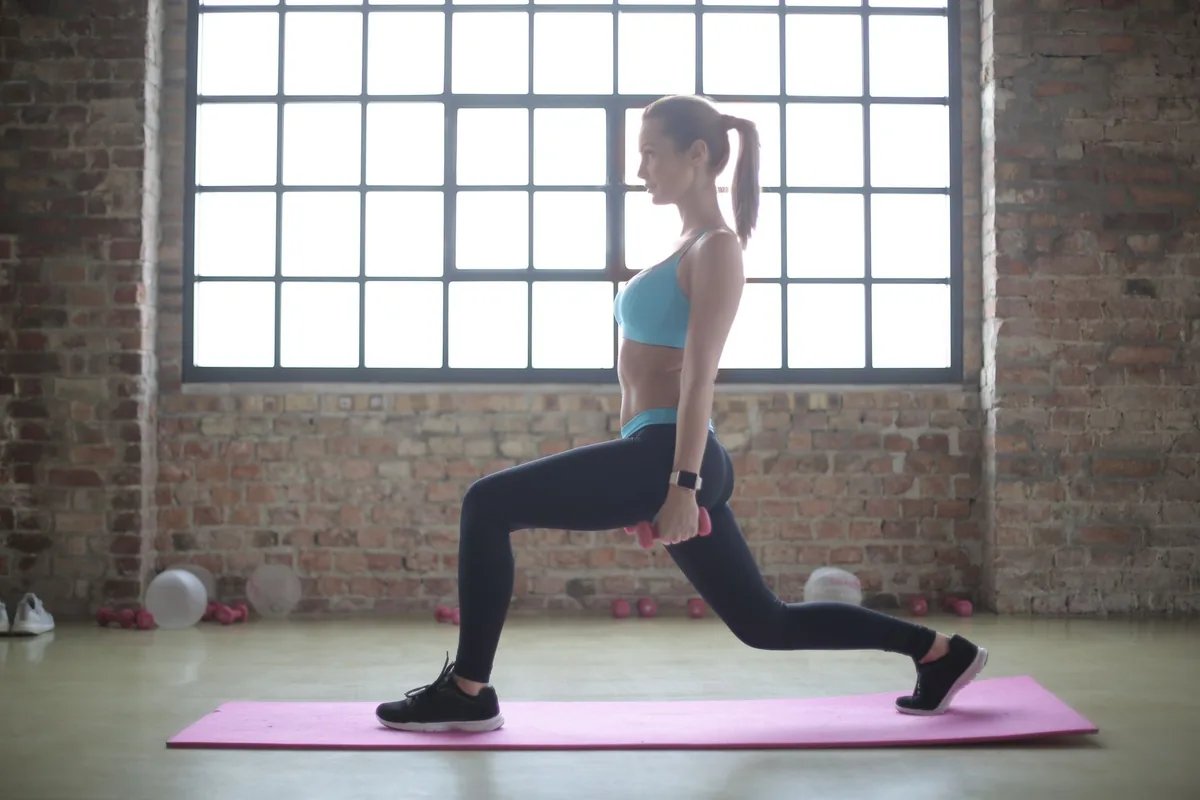
Train four days per week: two glute-focused days and two days for shoulders, back, and core. Resistance training can build muscle and influence your proportions, but it cannot change your bone structure or choose where your body loses fat.
Run the plan for 8 to 12 weeks and log every working set. Your one job is to progress those logged lifts without sacrificing form.
| Day | Focus |
|---|---|
| Monday | Glutes and hamstrings |
| Tuesday | Shoulders, back, and core |
| Thursday | Glutes and quads |
| Friday | Upper body and core |
By the Soma editorial team · Updated October 23, 2026. Soma makes a fitness and nutrition app, so we have a commercial interest in helping readers plan and track workouts. This educational guide is based on the sources linked below; it is not a promise of a particular body shape or a substitute for individual medical advice.
What This Plan Can—and Cannot—Change
Your skeleton, rib cage, pelvis, muscle insertions, and natural fat distribution all affect your outline. Training does not remodel those traits. It also cannot make fat come off one chosen area: a small localized-training study had only 14 mixed-sex completers, which is far too limited to promise spot reduction (2021 localized-training trial).
What you can train is muscle. Adding muscle to the glutes, side delts, and upper back may change the balance between your shoulders, waist, and hips. Core work can improve strength and control, but it does not selectively burn waist fat.
The evidence supports resistance training broadly, not a guaranteed silhouette or this exact routine. A 2020 systematic review and meta-analysis of 24 studies in healthy adult women found improvements in strength and muscle hypertrophy from resistance training (2020 review). Results still depend on your starting point, genetics, training effort, food, sleep, health, and time.
The 4-Day Hourglass Workout Plan
Do the workouts in order with at least one rest day between the two lower-body sessions. Warm up with a few minutes of easy movement and lighter practice sets for the first large exercise. The tables list working sets only.
Day 1: Glutes and Hamstrings
| Exercise | Sets | Reps | Effort |
|---|---:|---:|---|
| Barbell or Smith-machine hip thrust | 3 | 8-12 | Finish with 2-3 reps in reserve |
| Romanian deadlift | 2 | 8-10 | Stop when you cannot keep the same hinge |
| Reverse lunge | 2 | 8-12 each side | Use support if balance limits you |
| Seated or lying leg curl | 2 | 10-15 | Control the lowering phase |
| Cable kickback | 1 | 12-20 each side | No torso swing |
Use the hip thrust guide and Romanian deadlift guide if either main lift is new to you.
Day 2: Shoulders, Back, and Core
| Exercise | Sets | Reps | Effort |
|---|---:|---:|---|
| Lat pulldown | 3 | 8-12 | Keep ribs down; drive elbows toward your sides |
| Seated cable row | 3 | 8-12 | Pause without leaning back |
| Dumbbell or machine shoulder press | 3 | 8-12 | Stop before your back arches |
| Cable or dumbbell lateral raise | 3 | 12-20 | Raise without swinging |
| Dead bug | 2 | 6-10 each side | Exhale and keep your lower back controlled |
| Side plank | 2 | 20-40 seconds each side | End before your hips drop |
The upper-body workout for women explains these movement patterns in more detail.
Day 3: Glutes and Quads
| Exercise | Sets | Reps | Effort |
|---|---:|---:|---|
| Leg press | 2 | 8-12 | Use a pain-free depth you can control |
| Bulgarian split squat | 2 | 8-12 each side | Hold support if needed |
| 45-degree back extension | 2 | 10-15 | Hinge at the hip; avoid overextending |
| Leg extension | 2 | 10-15 | Smooth reps; no kicking |
| Hip abduction machine | 2 | 12-20 | Keep the range controlled |
If glute growth is your main priority, the glute workout plan for women has more detail on exercise selection and recovery.
Day 4: Upper Body and Core
| Exercise | Sets | Reps | Effort |
|---|---:|---:|---|
| Assisted pull-up or neutral-grip pulldown | 3 | 8-12 | Use a full comfortable range |
| Chest-supported row | 3 | 8-12 | Keep your chest on the pad |
| Incline dumbbell or machine press | 2 | 8-12 | Lower under control |
| Lateral raise | 3 | 12-20 | End the set when you need momentum |
| Rear-delt fly | 2 | 12-20 | Move from the shoulder |
| Pallof press | 2 | 8-12 each side | Resist rotation |
| Front plank | 2 | 20-45 seconds | Stop before your back sags |
Stay Inside Useful Volume Boundaries
This plan gives you roughly 14 to 16 challenging sets in which the glutes are a main contributor, 12 back sets, 8 direct shoulder sets plus pressing, and 8 core sets each week. Exercise overlap makes any exact muscle-set count an estimate.
The 2026 American College of Sports Medicine summary emphasizes consistency and progressive resistance training, with about 10 weekly sets per muscle group as a broad hypertrophy guideline—not a dose every person must exceed (ACSM resistance-training summary). Start at the low end if you are new, returning after a break, or regularly sore for more than two days.
More work is not automatically better. A 2024 secondary systematic review and meta-analysis of 14 randomized trials in postmenopausal and older women reported low-certainty evidence that higher volume outperformed lower volume for whole-body hypertrophy (2024 review). That finding should not be generalized to every younger woman, and it does not justify adding sets when your performance or recovery is getting worse.
If you are brand new to lifting, omit the cable kickback and hip abduction for weeks 1 and 2. Add them in week 3 only if the main lifts are steady and you are recovering between sessions.
Use these boundaries:
- Keep most working sets 2 to 3 good reps short of failure for the first two weeks.
- Do not add sets just because a workout did not make you sore.
- If soreness is still changing how you move at the next planned session, your reps fall for two sessions, or joint discomfort grows, remove 2 weekly sets for that area.
- Add at most 2 weekly sets for one target muscle after three steady weeks, and only if you are recovering and progressing.
Progress the Plan Week by Week
Use double progression: keep the load while you add clean reps inside the listed range; increase the load only after every set reaches the top of the range.
| Week | What to do |
|---|---|
| 1 | Choose conservative loads and record weight, reps, and reps in reserve for every set. |
| 2 | Add 1 rep to as many sets as you can while keeping 2-3 reps in reserve. |
| 3 | Keep adding reps. If every set reaches the top of its range, add the smallest available load next time. |
| 4 | Hold loads steady. If fatigue is building, remove one set from each exercise for this week. |
| 5 | Return to normal sets and restart near the lower end of each rep range with any earned load increases. |
| 6 | Add reps with the same form and range of motion. |
| 7 | Add a small load only where all sets reached the top of the range; keep 1-2 reps in reserve. |
| 8 | Cut working sets by about half, keep the movements easy, then review your log. |
| 9-11 | If you chose 12 weeks and feel recovered, repeat the progression from weeks 5-7. |
| 12 | Use another easier week and compare your results with week 1. |
Example: if your hip-thrust range is 8 to 12 and you log 50 kg for 10, 9, and 8 reps, keep 50 kg next time and try to beat at least one set. Once you reach 12, 12, and 12 with clean form, increase the load and build back up. For the full method, read progressive overload explained.
Exercise Substitutions That Preserve the Plan
Swap the movement pattern, not the purpose of the day.
| If this does not suit you | Use one of these | Keep |
|---|---|---|
| Hip thrust | Dumbbell glute bridge or machine hip thrust | 3 sets of 8-12 |
| Romanian deadlift | Cable pull-through or 45-degree back extension | 2 sets of 8-12 |
| Reverse lunge or split squat | Step-up, supported split squat, or single-leg press | 2 sets of 8-12 each side |
| Lat pulldown | Assisted pull-up or band pulldown | 3 sets of 8-12 |
| Cable row | Chest-supported dumbbell or machine row | 3 sets of 8-12 |
| Overhead press | Machine press or landmine press | 3 sets of 8-12 |
| Lateral raise | Cable, dumbbell, or lateral-raise machine | 3 sets of 12-20 |
| Side plank or Pallof press | Dead bug or suitcase carry | 2 controlled sets each side |
A substitute should be pain-free, stable enough to progress, and available often enough to repeat. Do not change an exercise only because one session felt hard.
Use the 3-Day Version When Four Days Is Not Manageable
Do not squeeze four full sessions into three. Use the 3-day workout plan for women, or make this simple adjustment:
| Day | Session |
|---|---|
| Day 1 | Do Day 1 as written. |
| Day 2 | Do Day 2, then add leg press for 2 sets. |
| Day 3 | Do Day 3, then add pulldowns and lateral raises for 2 sets each. |
Skip Day 4. Keep the same 8-to-12-week progression rule. A manageable plan you can log beats a fourth day you repeatedly miss.
Measure Progress Without Letting One Number Judge You
Review progress every four weeks, not after each workout.
- Training: compare reps, loads, range of motion, and technique on the same exercises.
- Measurements: if you want them, measure waist and hips under similar conditions and record them without labeling the number good or bad.
- Photos: optional; use the same pose, distance, clothing, and lighting. Normal changes in water, digestion, and the menstrual cycle can affect appearance.
- Fit and function: note how consistent clothes fit and whether daily movements or workouts feel more capable.
No single measure proves muscle gain or fat loss. Look for a trend across several check-ins. If body composition is also a goal, read body recomposition for women; do not add an aggressive diet to this plan by default.
Honest Limitations and Safety
This is a general template, not a personalized prescription. The research cited above supports resistance training principles, but it did not test this exact 4-day plan, and average study results cannot predict one person's outcome. Eight to 12 weeks is long enough to judge adherence and strength trends; it is not a deadline for a visible shape change.
Stop an exercise if you feel sharp, sudden, or worsening pain. Get medical guidance before starting or returning to resistance training if you are pregnant or postpartum, have an injury, dizziness, chest pain, a condition affected by exercise, or have been told to limit activity. A qualified clinician or fitness professional can help adapt movements to your needs.
Run the Plan Before You Judge It
Train the same four sessions for 8 to 12 weeks. Log every working set, add reps before load, and stay inside the volume boundaries above.
That is the action: build confidence from evidence you can see in your own training log. Soma can keep your workout and nutrition records in one place, but the plan works only if you repeat it.